
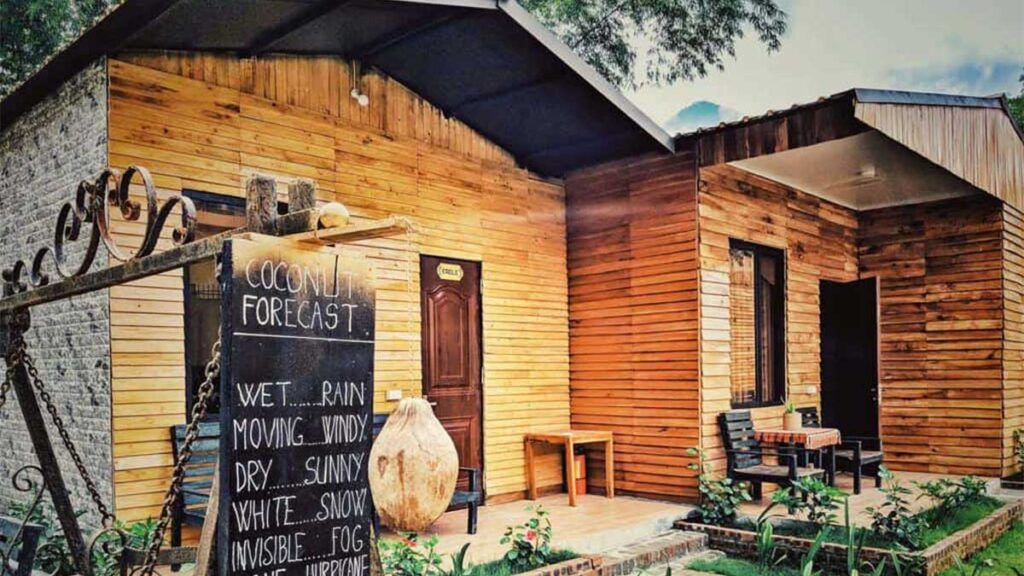
Where to stay on the Ha Giang Loop depends mainly on your route and the pace of your trip. Unlike a city break, the Loop usually changes overnight location as you move through the mountains. Common bases include Ha Giang City, Dong Van, Meo Vac, Du Gia and smaller villages used by specific itineraries.
Accommodation is practical rather than resort-style. Expect homestays, guesthouses and small hotels designed to give travelers a comfortable place to shower, eat, sleep and recover before the next riding day. The exact property can change with season, availability and route conditions, so understand the room type and what your booking guarantees.
Ha Giang Loop Accommodation at a Glance
Homestays are common in villages and rural areas. Guesthouses are common in towns and can feel similar to small family-run hotels. Dong Van and Ha Giang City usually offer the broadest choice, while Du Gia and smaller overnight areas have fewer large properties but a stronger village atmosphere.
There is no single “best hotel” for the whole Loop because you do not stay in one place. A good accommodation plan follows the route and avoids long detours at the end of an already demanding riding day.

Homestay, Guesthouse or Hotel: What Is the Difference?
The word “homestay” is used broadly in Vietnam. Some properties are genuine family homes with shared common spaces and simple rooms. Others operate more like small guesthouses while keeping a local design and social atmosphere. Do not choose by label alone: check whether the room and bathroom are private, whether hot water is available, and what bedding, towels, breakfast or dinner are included.
Dorm Rooms vs Private Rooms
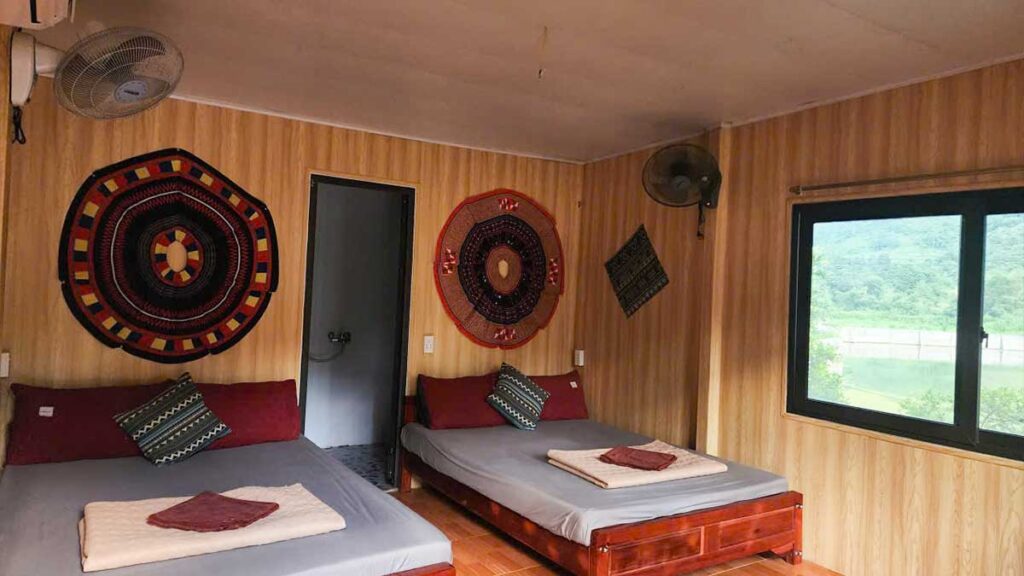
Shared dormitories are common on budget Loop tours and can be social for solo travelers. The trade-off is privacy and sleep quality. Private rooms suit couples, friends, light sleepers and travelers who want more recovery time; however, “private” should not be interpreted as luxury. Check the live tour page for the room arrangement included in your selected package.
Where to Stay Before the Loop: Ha Giang City
Ha Giang City is the normal staging point before the mountain route. Staying here the night before the tour gives you time to recover from the Hanoi transfer, reorganize luggage, eat and attend any pre-departure briefing without rushing. It is especially useful for Self-Riders who need to check the motorcycle, helmet, paperwork and weather.
Where to Stay in Dong Van
Dong Van is a common overnight stop on the northern part of the Loop. It has a wider range of accommodation than many villages and is convenient for the Old Quarter, local restaurants and the next stage toward Ma Pi Leng Pass and Meo Vac. Staying near the center is practical if you want to walk to dinner; properties outside may be quieter or more scenic.
Where to Stay in Meo Vac
Meo Vac sits close to the eastern side of Ma Pi Leng Pass and can be used as an overnight base depending on the itinerary. Expectations should remain realistic: look for clean rooms, secure motorcycle parking if you are Self-Riding, and a location that fits the next morning’s route.
Where to Stay in Du Gia
Du Gia has a very different atmosphere from Dong Van. Its valley and village setting make it popular for homestay-style nights, family dinners and a slower rural feeling after several hours on the road. Ask about bathroom arrangements, noise and private-room availability if these are important to you.
Staying in Smaller Villages
Some itineraries use smaller villages away from busy tourist centers. These nights can become memorable, but facilities are fewer: Wi-Fi and mobile signal may vary, food choices can be limited, and essential medication should be carried with you.
What Facilities Should You Expect?
Most established Loop accommodation provides a bed, basic bathroom access and a place to charge devices. Hot water is common but should not be assumed at every rural property. Bring a small power bank, toiletries you care about and earplugs if you are a light sleeper.
How Much Does Accommodation Cost?
Prices change by room type, location, season and whether meals are included. A dorm bed, a basic private homestay room and a central hotel room should not be compared as if they are the same product. On a package tour, focus on what is included in the total; when traveling independently, compare bathroom type, breakfast, parking and cancellation terms.
Accommodation for Couples, Solo Travelers and Families
Couples usually value a private room; confirm whether a double bed and private bathroom are guaranteed. Solo travelers often enjoy dorms but may value a private-room supplement for better sleep. Families and older travelers should ask about stairs, bathroom access, mattress type and walking distance from parking to the room.
What About Large Luggage?
Carry only a small bag on the Loop. Large suitcases make motorcycle logistics harder and are unnecessary for a few nights. Confirm where the rest of your luggage can be stored in Ha Giang City, and keep passports, money, medication and valuable electronics with you.
Winter and Rainy-Season Accommodation
In winter, mountain nights can feel cold even indoors, so bring warm sleepwear and socks. During rainy season, waterproof luggage and dry clothing matter more than a scenic terrace. Allow enough buffer so the group reaches the overnight stop without hurrying on wet or foggy roads.
How SkyPath Accommodation Should Be Evaluated
Look at the live tour page for the room policy, accommodation standard and inclusions. If a property is not guaranteed by name, the operator may use an equivalent alternative when availability changes. What should remain consistent is the promised room type or standard, basic cleanliness and the operational logic of the itinerary.
How to Read Accommodation Inclusions on a Tour Page
The phrase accommodation included is not enough by itself. Look for whether the package promises dormitory beds, private rooms, twin or double occupancy, and whether a single supplement applies. Also check whether the first or final night in Ha Giang City is included. Some packages begin with the riding day only, while others may include pre-tour rest arrangements. The distinction affects both budget and transport planning.
Noise, Social Atmosphere and Sleep
Some homestays are highly social, with group dinners, music or late conversations. Others are quiet family properties. Neither is automatically better, but the atmosphere should match the traveler. Earplugs are one of the simplest useful packing items on the Loop. If sleep quality is a priority, tell the operator before the trip rather than hoping the group will be unusually quiet.
Charging Phones, Wi-Fi and Connectivity
Most established properties have electricity and places to charge phones, but the number of sockets can be limited in shared rooms. A small multi-port charger or power bank reduces competition for outlets. Wi-Fi quality varies, and mobile data may be weaker in valleys or remote villages. Download important booking information and maps before leaving Ha Giang City. Accommodation should be treated as a place to rest first, not as a guaranteed remote-work environment.
Laundry and Wet Gear
On a multi-day mountain trip, wet shoes or clothing can become a bigger comfort problem than room decoration. Ask whether the property has a covered drying area, and keep a separate bag for damp items. During rainy periods, do not expect everything to dry overnight. Packing quick-dry layers and a spare pair of socks can improve the next riding day far more than carrying extra fashionable clothing.
Frequently Asked Questions
Many package tours do, but always check the live inclusion list for the specific tour.
Private rooms are available on many itineraries, but the policy and any supplement depend on the booking.
They can be clean and comfortable, but facilities are usually simpler than urban hotels.
Often yes, but rural property standards vary. Ask if this is important to you.
There is no single best town. Dong Van, Meo Vac, Du Gia and other stops work because they fit different parts of the route.
For a guided package, accommodation is often arranged as part of the itinerary, but confirm the room type and any private-room supplement before you book. Independent travelers should reserve ahead for weekends, public holidays and peak periods, especially in Dong Van and Du Gia.
Most established properties provide bedding, but mountain nights can feel cold and heating is not guaranteed in every room. Pack warm sleepwear and socks, and ask the operator or property about the expected room setup if you are traveling in winter.
Many are suitable, but facilities vary. Families and groups should ask in advance about private rooms, bed configuration, bathroom access, stairs, parking and whether the overnight stop fits their route and comfort needs.
Choose Accommodation for the Journey, Not for a Hotel Checklist
The best place to stay on the Ha Giang Loop is the place that supports the next day of travel while giving you enough rest. A simple homestay in the right valley can create a better trip than a more polished room that forces unnecessary riding or removes you from the route.
Use our Ha Giang Loop map and main stops guide to choose the best overnight stop for your route.